Tuesday, April 25, 2017
Final Essay: Dominic Marini
Games For The Mind, Body, & Soul is an essay focusing on the positive impacts of video games on a person's social, emotional, and physical aspects of life.

Essay Exhibit Discussion
 During our final week of classes in Digital Humanities, the class was able to put there final essays on exhibit for everyone to view. I particularly enjoyed the Google Maps Essay exhibit that one of my classmates did. She included "Mr. Plimpton's Revenge" and that was one of the coolest things we looked at this semester. Google Maps essays allow people to tell location based stories by showing certain places on an actual map to the reader. They also allow the creator of the essay to input text and pictures to the maps to give the reader a fuller experience while reading the narrative.
I also really liked the exhibit on convergence, it was a really fascinating topic that caught my attention. Convergence is an interesting thing that says eventually all media will flow through one outlet - this is the black box fallacy. Henry Jenkins argued the theory, saying that media will eventually be everywhere, and will not flow through one "black box". Overall, all of the exhibits were really interesting and I thought that everyone did a great job in the class. Digital Humanities was definitely a thought provoking course that I'm glad that I took!
Final Essay by Jon Dicey
To conclude the excellent semester, my essay titled "Video Games: Growing Trend and New Form of Human Expression" touches on how video games have affected modern society and how it relates to Digital Humanities.
-Jon Dicey-University of Pittsburgh at Johnstown-Spring of 2017
-Jon Dicey-University of Pittsburgh at Johnstown-Spring of 2017
Saturday, April 22, 2017
Essay Exhibit Discussion
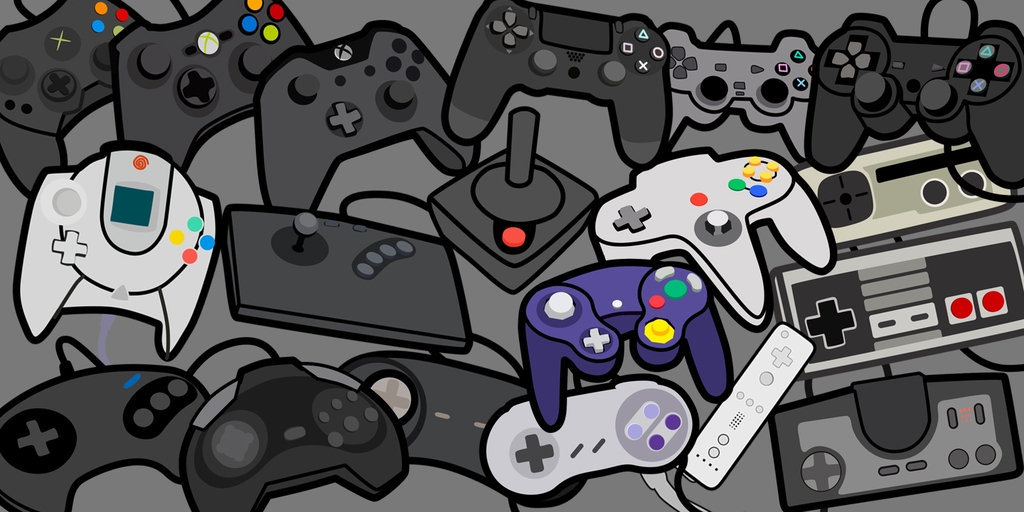 This past week in Digital Humanities we've been having an essay exhibit for everyone's final essay topics. I decided to choose the affects of video games in modern society as my topic for the exhibit and final essay. I've also gathered quite a bit of information from other students from their exhibit pieces. Even though there was a lot of variety as far as topics go, but the majority of the topics were based off video games. Digital Humanities display many different forms of human expression in relation to the advancement of modern technology. But, after the essay exhibit, video games have had more of an impact on our generation based on research I have gathered and from what I have seen in other students exhibit pieces.
 The piece that other students have created that will help me with my essay is Hunter Graham's piece on video games and religion. Another piece that I found interesting that I will definitely incorporate into my essay is video games and the military. When I first looked at both of these pieces I was shocked that video games have had such an affect on religion and military. Religion really opened my eyes because I thought video games had nothing to do with religion. The military, however, made a lot of sense to me due to the amount of war games that are growing in popularity today.
 My essay will cover all the affects video games have had on modern society and how the trend will continue to grow in future generations. Religion and the military will also be referenced in my essay. I hope to continue to see more innovative and exciting breakthroughs in the gaming industry.
Friday, April 21, 2017
Final Essay
To wrap up our Digital Humanities course we were asked to write a final research essay. I was initially inspired to write my essay on the self generating text poem "Camel Tail" by Sonny Rae Tempest. Obviously, I needed to expand my subject to be able write a 5 page essay, so I chose the issue of authorship and who really owns "Camel Tail" as a whole. In my essay, I take a look at the analog age and digital age. I also look at how society has come to accept remix culture as a norm. You can find my essay "The Question of Authorship in the Digital Age" here.
-Chelsea Furnari ~ The University of Pittsburgh at Johnstown, Digital Humanities Spring 2017
-Chelsea Furnari ~ The University of Pittsburgh at Johnstown, Digital Humanities Spring 2017
Wednesday, April 19, 2017
Essay Exhibit Discussion
There is a big array of different topics seen in our class of Digital Humanities. However most of the essay exhibits that I have looked at, have to do with video games. Video games are a very popular subject. There can be many things to say when i
 t comes to video games, and I figured that out today. Members of my class talked about all different aspects of them from religion to violence to virtual reality.
One of my classmates talked about religion in video games. It is a very interesting topic. He focused on the two religions, Christianity and Hinduism. He first started out with talking about the different misconceptions about video games. He talked about how some people think that video games are only catered to the youth. This is not true. There are some video games that are better catered to an older audience. He also talked about how some people think that video games have an "unreal" environment. There are many games that have a real environment. One of those games is Grand Theft Auto. It is set in a city, which is very real. Some of the video games that he talked about were Zelda and Journey. In Zelda, there is a cross that is used to see ghosts. There is also three goddesses in the game. These goddesses are representations of the Father, Son, and Holy Ghost. Another video game that he talked about was Journey. This video game represents the "journey" that one takes after they die, on their way to heaven. I really like this project. It was interesting to think about a video game from a religious stand point.
Another classmate talked about violence in video games. There is a lot of misconception when it comes to violence in video games. Some claim that playing an excess amount of violent video games can have an effect on the gamer. My classmate provided an example of a research study that proved this to be false. An excess amount of violent video games do not make a person violent. It is a myth. He also talked about social media and empathy. My classmate claimed that an excess of time on
 social media can cause a person to loss empathy. I believe that this is true. When hiding behind a screen, it is easy to forget that there are people behind each social media account. I like this project very much. It brings light to the misconceptions about violence and video games.

One of my classmates talked about religion in video games. It is a very interesting topic. He focused on the two religions, Christianity and Hinduism. He first started out with talking about the different misconceptions about video games. He talked about how some people think that video games are only catered to the youth. This is not true. There are some video games that are better catered to an older audience. He also talked about how some people think that video games have an "unreal" environment. There are many games that have a real environment. One of those games is Grand Theft Auto. It is set in a city, which is very real. Some of the video games that he talked about were Zelda and Journey. In Zelda, there is a cross that is used to see ghosts. There is also three goddesses in the game. These goddesses are representations of the Father, Son, and Holy Ghost. Another video game that he talked about was Journey. This video game represents the "journey" that one takes after they die, on their way to heaven. I really like this project. It was interesting to think about a video game from a religious stand point.
Another classmate talked about violence in video games. There is a lot of misconception when it comes to violence in video games. Some claim that playing an excess amount of violent video games can have an effect on the gamer. My classmate provided an example of a research study that proved this to be false. An excess amount of violent video games do not make a person violent. It is a myth. He also talked about social media and empathy. My classmate claimed that an excess of time on

Essay Exhibit Discussion
During our final week of class, my classmates and I had the chance to present our final projects and view others projects. I found this activity very helpful and beneficial, it allowed me to get more ideas about my topic and to assist others in their topics. I viewed several different topics that I found eye opening.
 One of the projects that I viewed was on the idea of technological convergence. I am familiar with this topic and find it rather interesting. My classmate brought up the theory that humans today thirst for technology and that it is almost a necessity to daily life. Convergence deals with transforming old forms of media into new and more efficient forms. She stated that technology has a massive effect on communication, which is true. Also she stated that there is less face to face communication, also that there is a bigger emphasis on texting, phone calling, and emailing. Although this is true in today's society I still believe humans are still very involved in each other and thrive in communication. There is a common belief amongst older generations that younger people do not communicate with others well, I highly disagree with this belief. The communication is enhanced with the powers of technology. Phones and tablets can allow for more communication then ever before. I am excited to see how my classmate expands on this topic in her final paper.
 Another project that I viewed was the relationship between video games and religion. I have played video games for many years now, but never really thought about this overlap. For the purposes of his essay, he is focusing on Christianity and Buddhism in video games. This idea is prevalent in games that have endings which demands for reaching a higher place. For example, a game called "Journey" which entails its user to go through a series of events in order to reach the top of a mountain. The top of the mountain represents heaven. I think this idea is marvelous and can really shed a light on spiritual feelings inside video games. Video games have the potential to be more than just entertainment. They can be used as tools for many different aspects of humanity, such as religion.
 Another project that I viewed was the relationship between video games and religion. I have played video games for many years now, but never really thought about this overlap. For the purposes of his essay, he is focusing on Christianity and Buddhism in video games. This idea is prevalent in games that have endings which demands for reaching a higher place. For example, a game called "Journey" which entails its user to go through a series of events in order to reach the top of a mountain. The top of the mountain represents heaven. I think this idea is marvelous and can really shed a light on spiritual feelings inside video games. Video games have the potential to be more than just entertainment. They can be used as tools for many different aspects of humanity, such as religion.
Final Essay
My final essay takes a look at data mining and boy bands. It explores why the boy band, Backstreet Boys, is so popular. Its titles Data Mining Boy Bands.
Wednesday, April 12, 2017
Convergence
Convergence is defined as the process or state of converging. For the sake of our class Digital Humanities, it refers to the converging of all things digital. In Convergence Culture by Henry

Some examples of convergence are modern models of cars. In today’s standard models of car there are many different things that you can do in cars. There is usually a navigation system in every car. There is also a radio where you can listen through FM, AM, and XM frequencies. There are also bluetooth capabilities in car which allows the speakers of the car to become a phone. Another example of convergence is a smart TV. A smart TV lets a person watch television shows and movies through different mediums on one device. Smart TV converge all of theses medium into one. Convergence is a thing of the future. Another example can be seen in today’s smart phones. Before the era of smart phones, the only capability of a cell phone was to make calls. With the cell phone evolving into a smart phone, they can now be used to play games, search the web, and numerous other activities. Smartphones can be seen as a swiss army knife when it comes to technology.
Friday, April 7, 2017
Beethoven Archive
Ludwig van Beethoven was one of the most influential musicians of all time. He was born in December 1770. Beethoven gave his first public performance at the age of 7 in Cologne, Germany. At the age of 21 he moved to Vienna and started to study composition. In 1800 he gave his first

In our archive, we will include all different types of Beethoven’s works. It will include all of Ludwig van Beethoven symphonies, all of his concerto’s and all of his sonatas. We will include both the scripts of the original works and recordings of each composition. We will also include the many different

Monday, April 3, 2017
Data Mining
Data mining is the practice of examining large database in order to generate new information. Data mining can be conducted with many different programs and resources. Data mining can be used to analyze different works of literature. Data mining has become easier and easier to do with developing programs. Voyant is a tool that allows its user to plug in any form of text and will then "mine" information. It creates numerous pieces of information that can be seen below

This is one of our group blog posts about video, are most used words were game, computer, and played. We then plugged those top words into Googles Ngram Viewer. As you can see the word "computer" spiked rapidly from the 1950's to 1990. We found it interesting that the word "computer" started to decrease slightly towards the early part of the 2000's. Most would assume that the word "computer" would continue to climb into the age of technology. However, Ngram shows that the word has hit a plateau.

Here is another blog post from our blog, Make Digital Humanities Great Again.

When looking at the words literature and reader, there is some what of a correlation. In the 1800’s the word reader had a positive correlation while the word literature had a negative correlation. Around 1880, the two words were used just about the same. The two different lines come together. After the 1880’s, the two words continued on their track. “Reader” continues to be used less and less while the word “literature” continued to be used more and more. The world electronic was not noticeably used until the late 1920's and early 1930's.

Subscribe to:
Comments (Atom)