
A
bot, short for robot, is a computer program designed to operate autonomously, performing scheduled, responsive, or real-time operations in a computer, through the internet, and/or social media networks. Bots are a unique type of program because they can interact with humans, and often take on a human-like persona. Some may even argue that bots have the capability to interact with other bots or even humans.

An excellent example of a bot that takes on human characteristics would be the
Real Human Praise Twitter bot, that takes pieces of positive reviews from
Rotten Tomatoes (a movie and television aggregator), changes the director or producers name to a
Fox News anchor or personality, and tweets it every two minutes. This Twitter account and bot were produced by the TV show
The Colbert Report as a response to the rumor that Fox News publicists had thousands of fake social media accounts to try to deflect any negative posts or comments made about their news channel. The constant positive praise comes across ridiculous and ironic, which is exactly what the producer of The Colbert Report (Rob Dubbin) was going for to put shame to Fox News.

Another great example of a self generating text that is created by the powers of bots, is the
NRA Tally. This self generating text uses some factual evidence and some sarcasm to create a political stance against the
NRA(National Rifle Association). It creates a headline about a mass shooting,
followed by a statement about the NRA, which creates a satirical moment for the reader. The efforts by this bot and many other bots can be seen and heard all around the world.
As one looks deeper into these bots a lot of interesting thoughts and perspectives can arise. Should a person really listen to the bot? Who is actually writing these texts?
When thinking about bots, it is hard to establish who the author of the text is. There are many different contributors when it comes to making bots. Because of the different aspects that are involved in making the bots, there could be several different authors. The person that wrote the computer code that is actually generating the bot could be considered an author. The computer that is generating the text could also be considered an author. In some cases, bots use previously written pieces of art to create different works of art. The pervious authors could also be considered an author to the new piece of art. The considered author is dependent on what the reader thinks of a contributor. Some might think since the computer cannot truly think for itself, it should not be considered an author. Authorship is dependent on personal opinion.


 A bot, short for robot, is a computer program designed to operate autonomously, performing scheduled, responsive, or real-time operations in a computer, through the internet, and/or social media networks. Bots are a unique type of program because they can interact with humans, and often take on a human-like persona. Some may even argue that bots have the capability to interact with other bots or even humans.
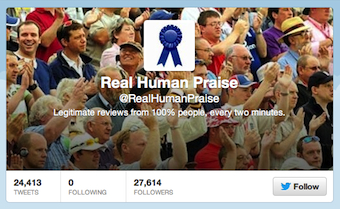 An excellent example of a bot that takes on human characteristics would be the Real Human Praise Twitter bot, that takes pieces of positive reviews from Rotten Tomatoes (a movie and television aggregator), changes the director or producers name to a Fox News anchor or personality, and tweets it every two minutes. This Twitter account and bot were produced by the TV show The Colbert Report as a response to the rumor that Fox News publicists had thousands of fake social media accounts to try to deflect any negative posts or comments made about their news channel. The constant positive praise comes across ridiculous and ironic, which is exactly what the producer of The Colbert Report (Rob Dubbin) was going for to put shame to Fox News.
 Another great example of a self generating text that is created by the powers of bots, is the NRA Tally. This self generating text uses some factual evidence and some sarcasm to create a political stance against the NRA(National Rifle Association). It creates a headline about a mass shooting,


